

We regularly update all of our dependencies via dependabot, Renovate, or our own automation on RWX to open PRs.
Quickly adopting security and bug fixes is a good engineering practice. It's also helpful to identify potential issues with upgrades as soon as possible.
#Noticing a Character Encoding Issue
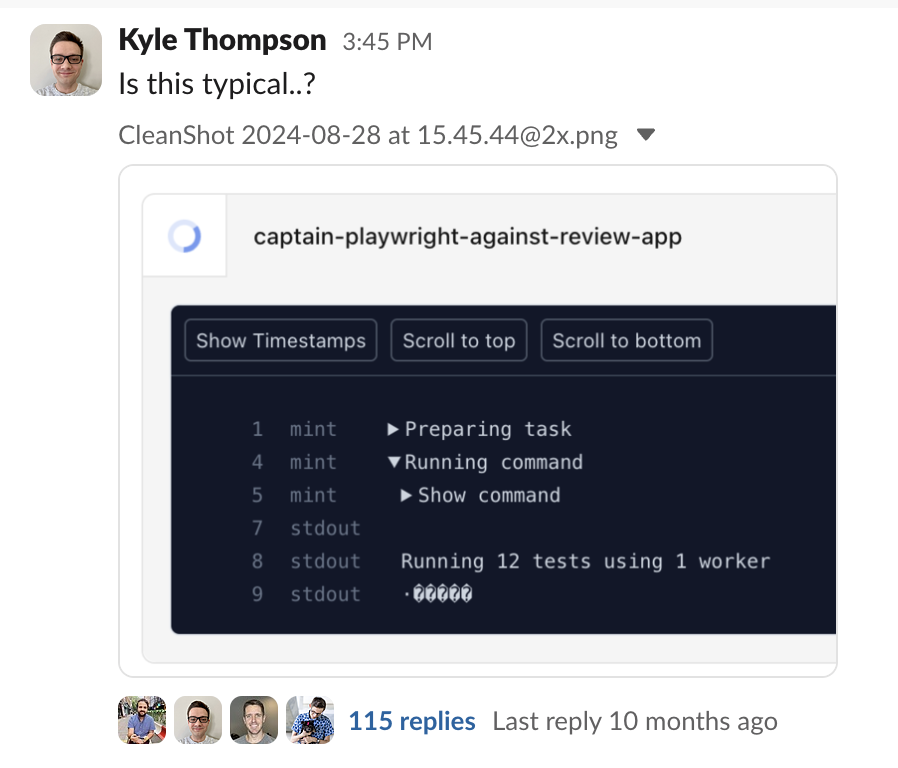
Last August, we noticed an encoding issue in our logs. Note the funky question mark characters towards the bottom of the logs.
#Node 22.7 Buffer Issues
Earlier that day, we had upgraded from Node 22.6.0 to Node 22.7.0. It turns out, that version of Node introduced several encoding issues.
Hi! v22.7.0 has a few known buffer issues
#Minor Versions Matter
Minor versions of runtimes can introduce bugs. We've also previously run into an issue due to an inconsistency in a patch version.
As a best practice, ensure a consistent version is used across all environments. Especially be sure to test against the version that you'll use in production. Pin to a specific version rather than "22.x"
#Tool Versions
.tool-versions is a common file used for configuring dependencies.
It works with asdf, mise, other runtime version managers.
nodejs 22.17.0
You can easily use the .tool-versions file in your RWX workflows with the rwx/tool-versions package.
tasks:- key: codecall: git/clone 1.6.7with:repository: ...- key: tool-versionsuse: codecall: rwx/tool-versions 1.0.4filter: [.tool-versions]- key: nodecall: nodejs/install 1.1.7with:node-version: ${{ tasks.tool-versions.values.nodejs }}
Related posts

Unlock agent-native CI/CD with the RWX Skill
RWX has launched an official skill for working with the RWX CLI and run definition files.

Trigger runs via Webhook
You can now trigger RWX runs from webhooks from third-party services. This is helpful for using RWX to run custom automation.